




Features
Read More ›
Photo Essay: Where Bees Take Flight
Behind the runways at Seattle-Tacoma International Airport, a small apiary reveals a hidden pollinator habitat.

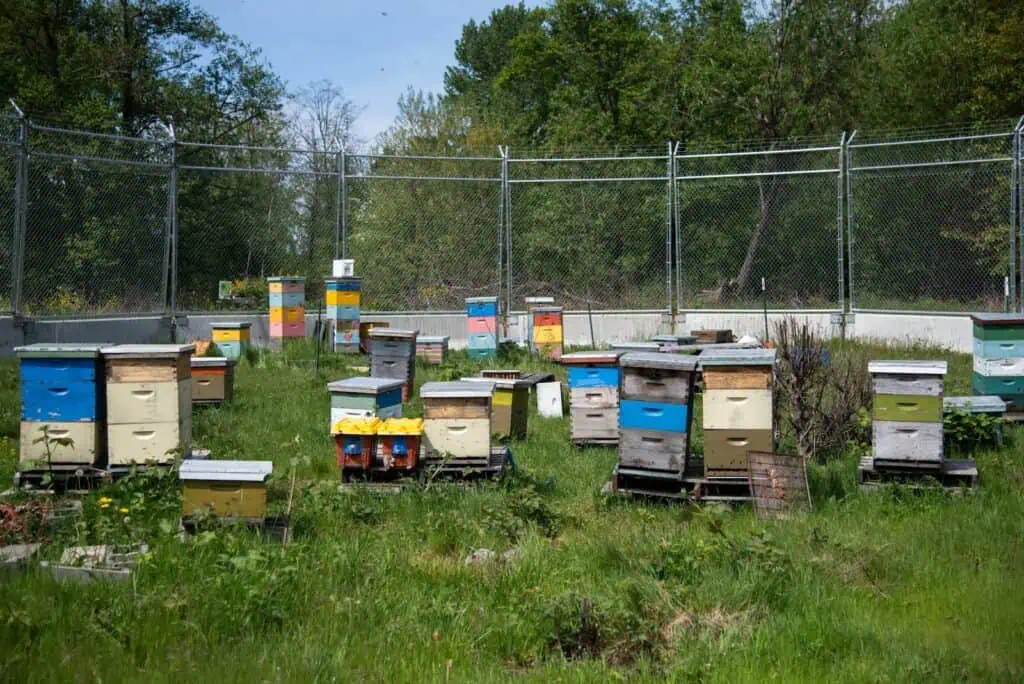
Tucked away on the southern end of the airport, on land that was once a golf course, a small apiary feels worlds away from the rest of the airport.
The hives have been part of SEA since 2013, when the Port of Seattle partnered with the local nonprofit The Common Acre to create Flight Path, a project that raises honeybees and turns unused green space near the airfield into native pollinator habitat. Today, Siobhan Hutchison of Sunflower Bee Company manages the apiary.
Airport security requires natural buffer areas around the runways, creating land that stays largely out of public view and turns out to be ideal for bees.
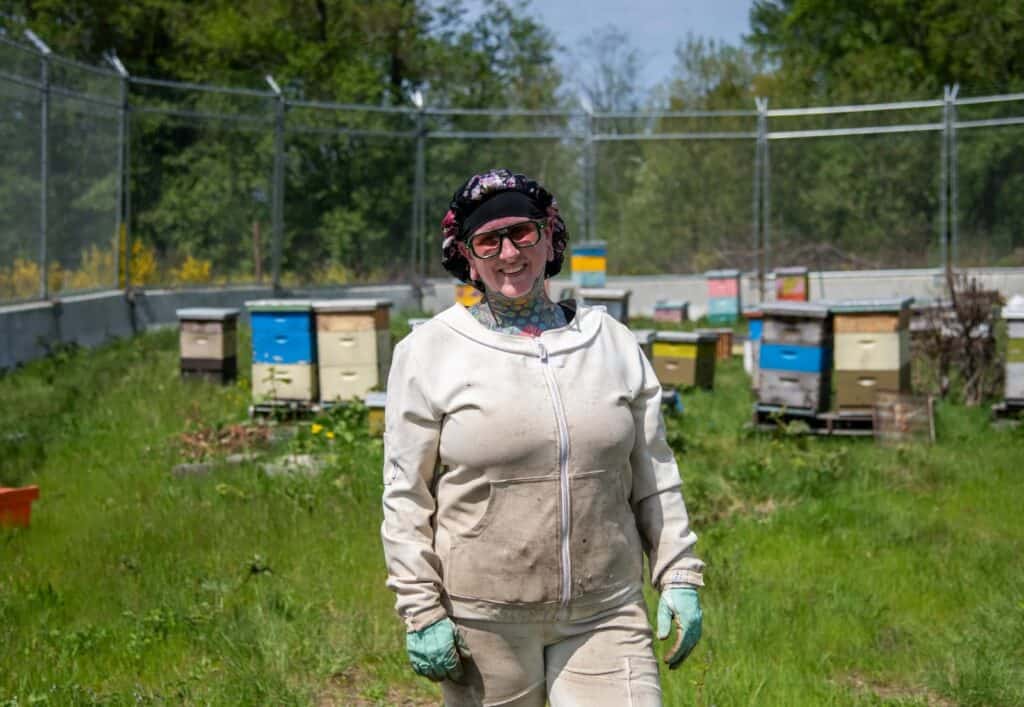
I was drawn to the project because it revealed a quieter, unexpected side of the airport. Most of us experience airports through security lines, boarding gates, and the steady flow of people and planes. But just beyond all of that, there are hives full of bees, frames of honeycomb, and a beekeeper inspecting them in a place travelers never see.
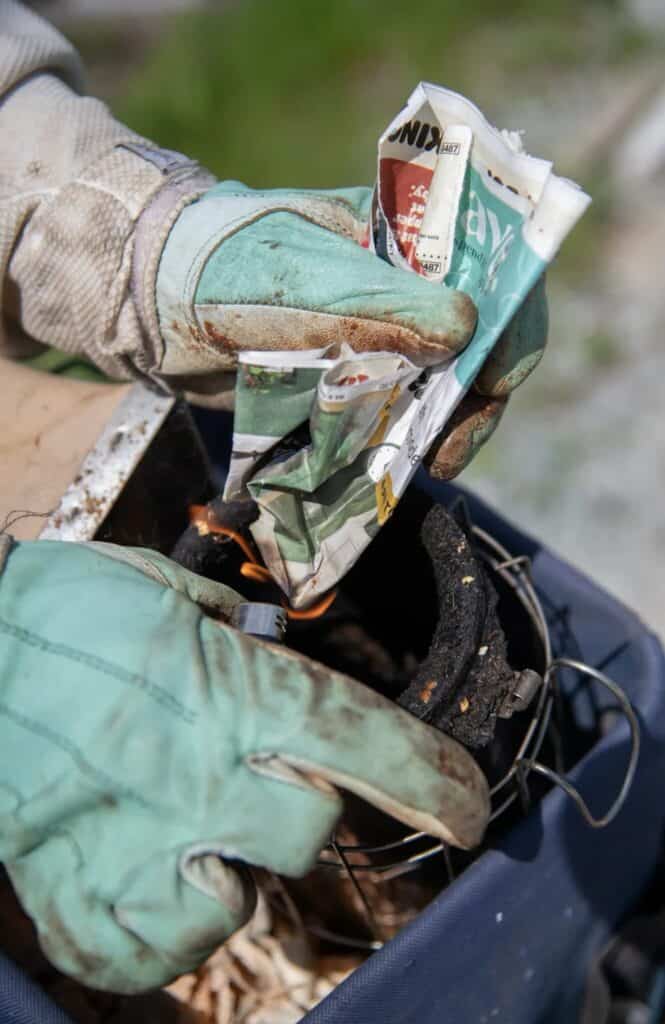
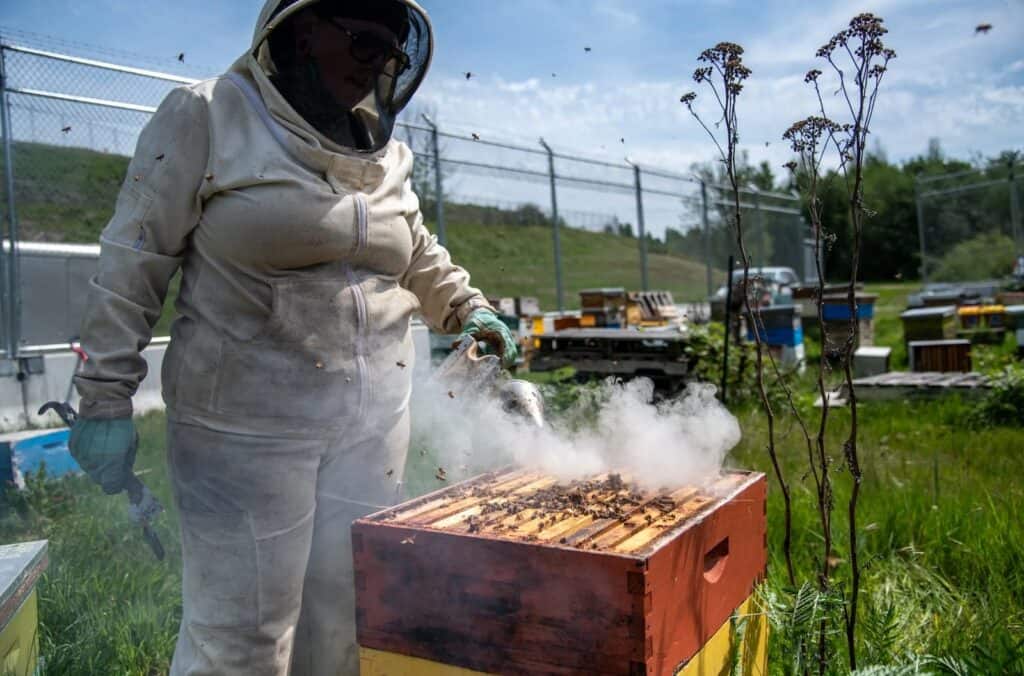
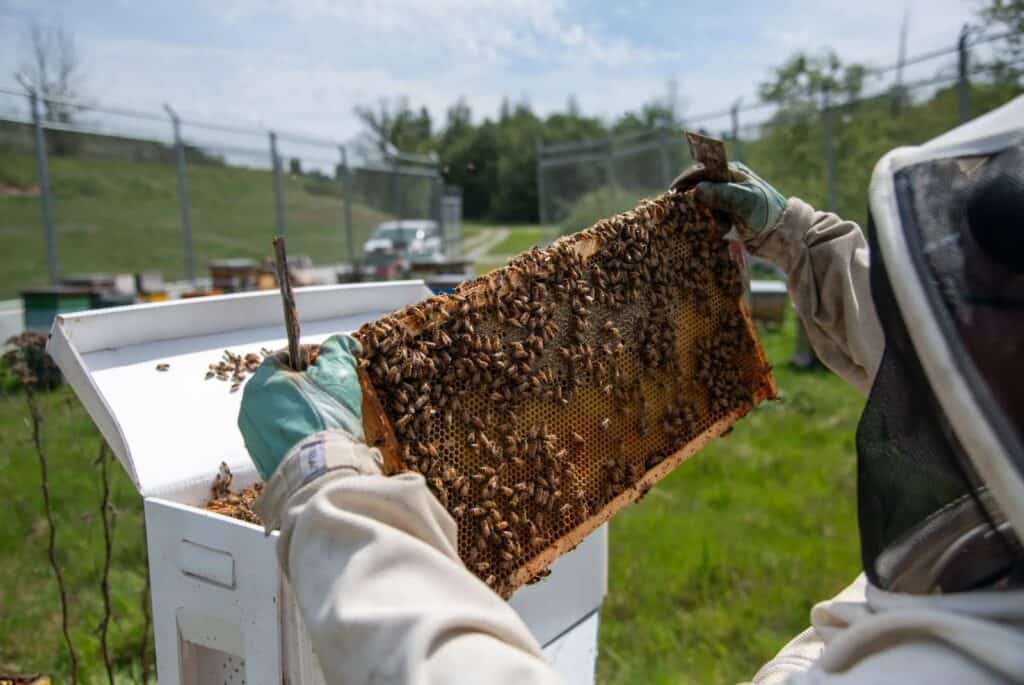
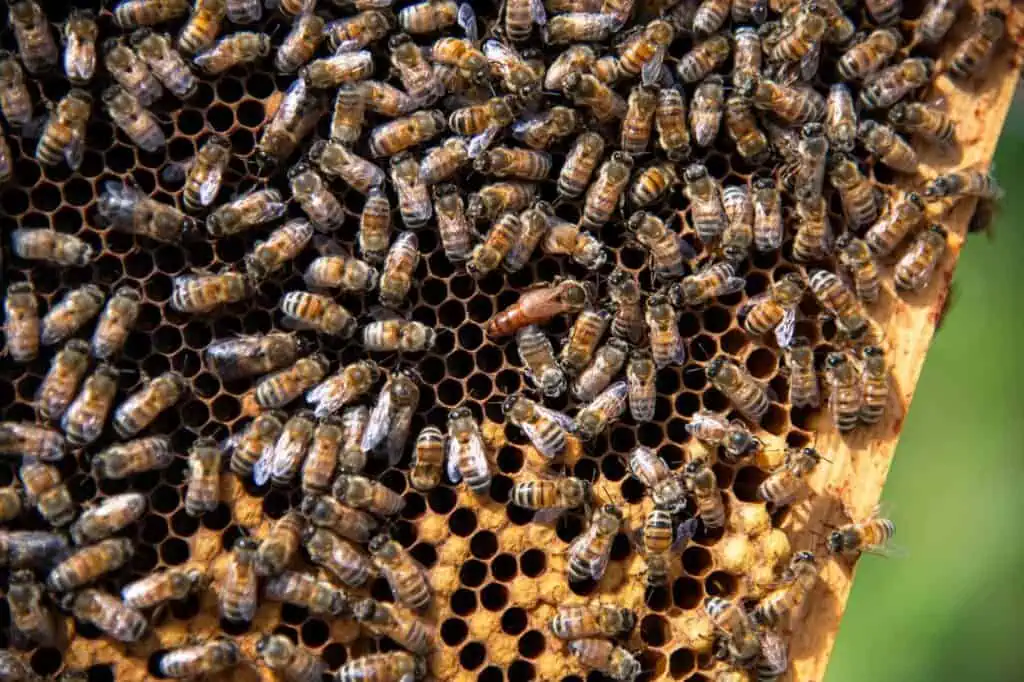
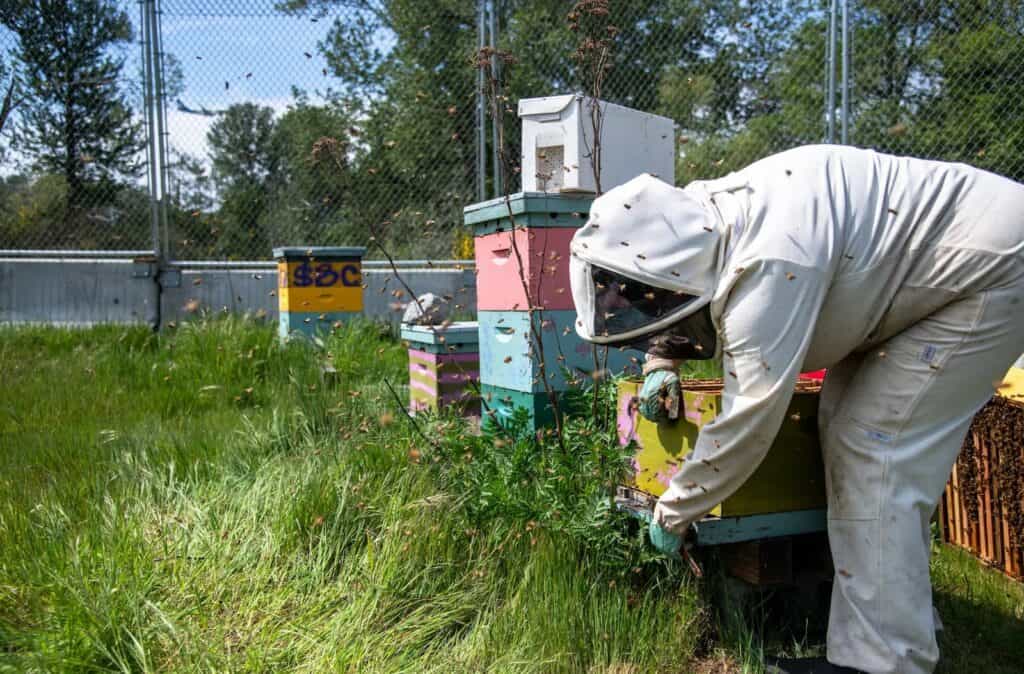
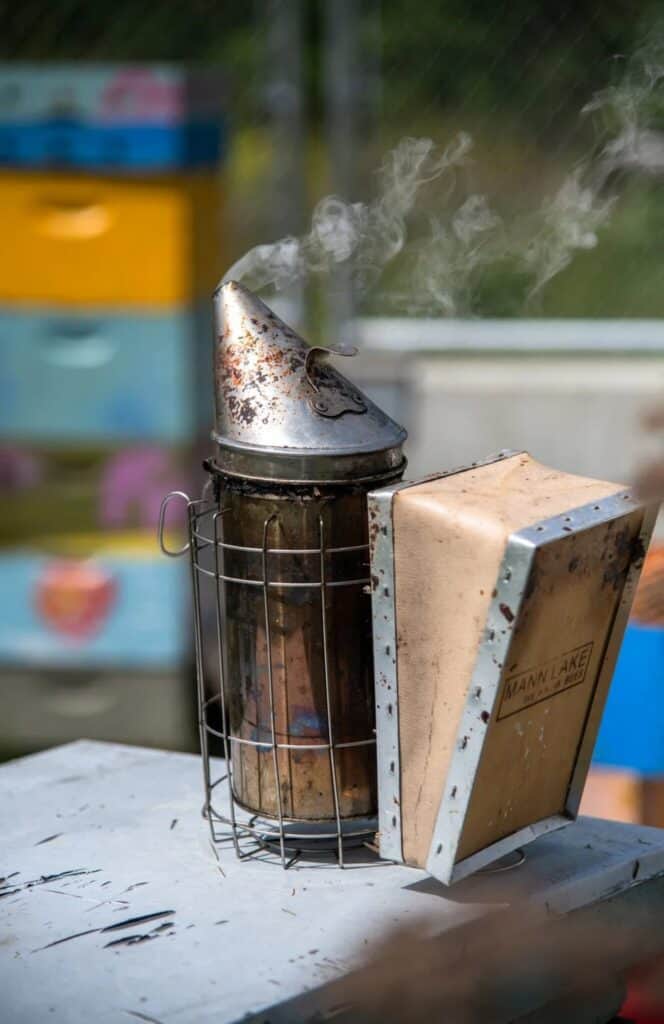
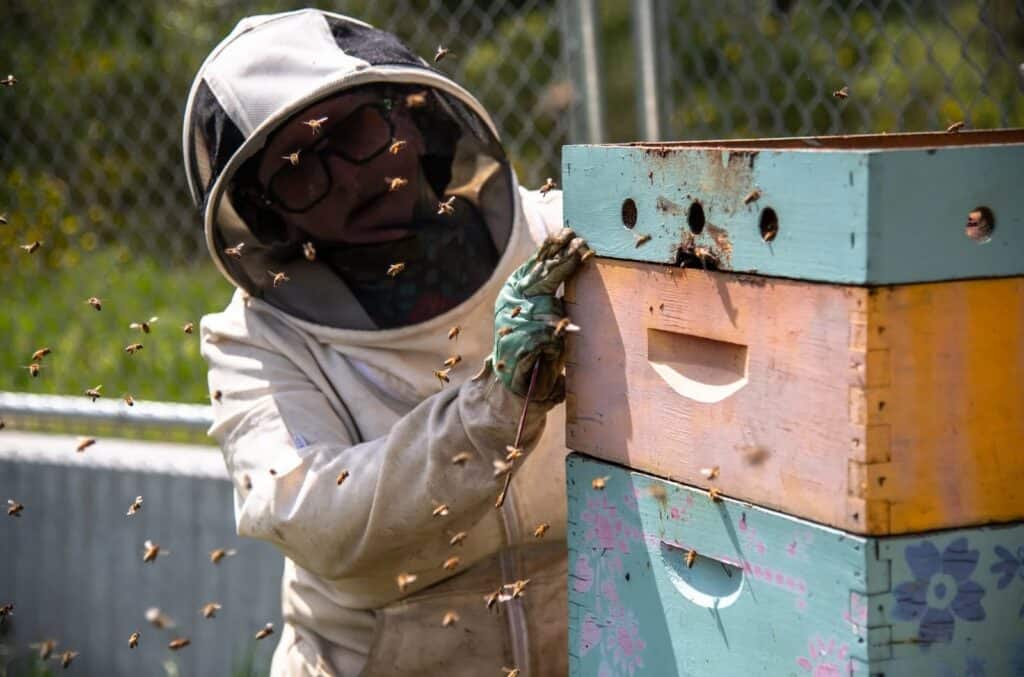
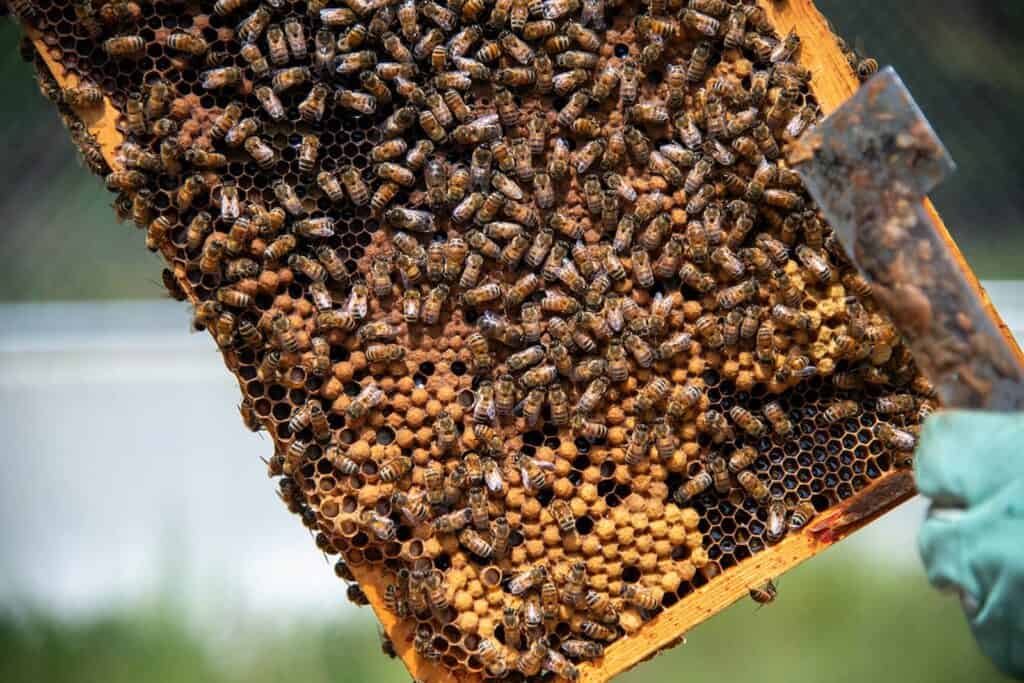
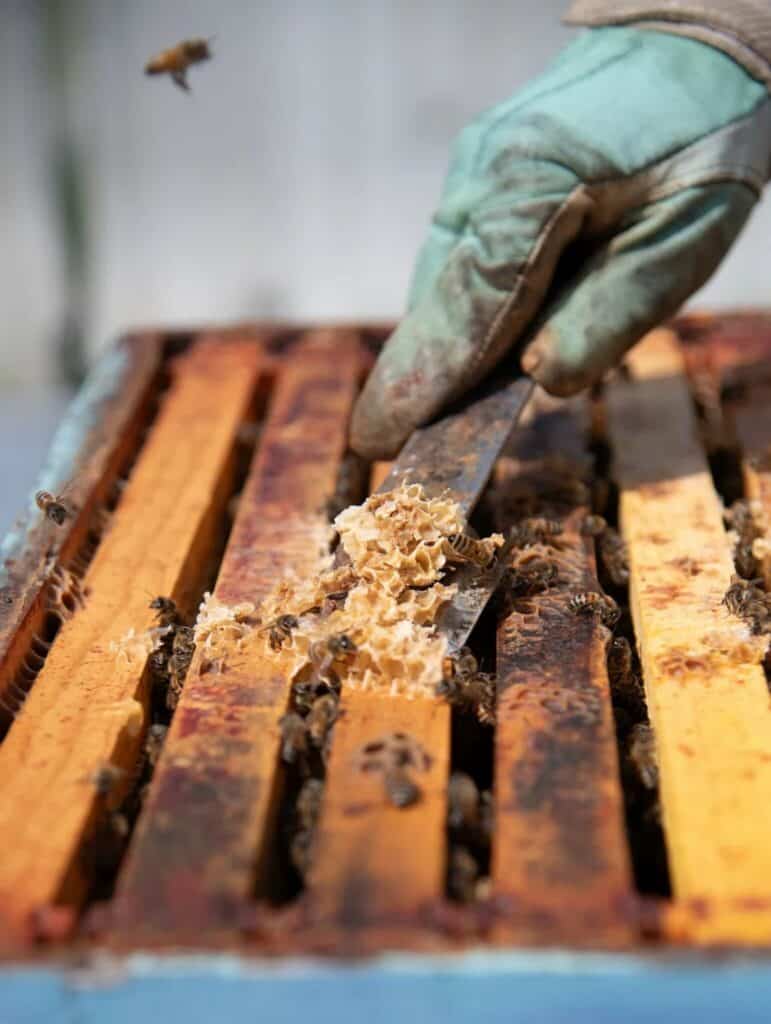
I photographed Siobhan as she opened several hives and checked each frame. During an inspection, she looks for signs that a healthy queen is present and laying eggs, and that the bees have enough space and resources to stay strong. She also watches for signs of swarming, which can weaken a colony when part of the hive leaves with the queen. Near a runway, managing that possibility is especially important.
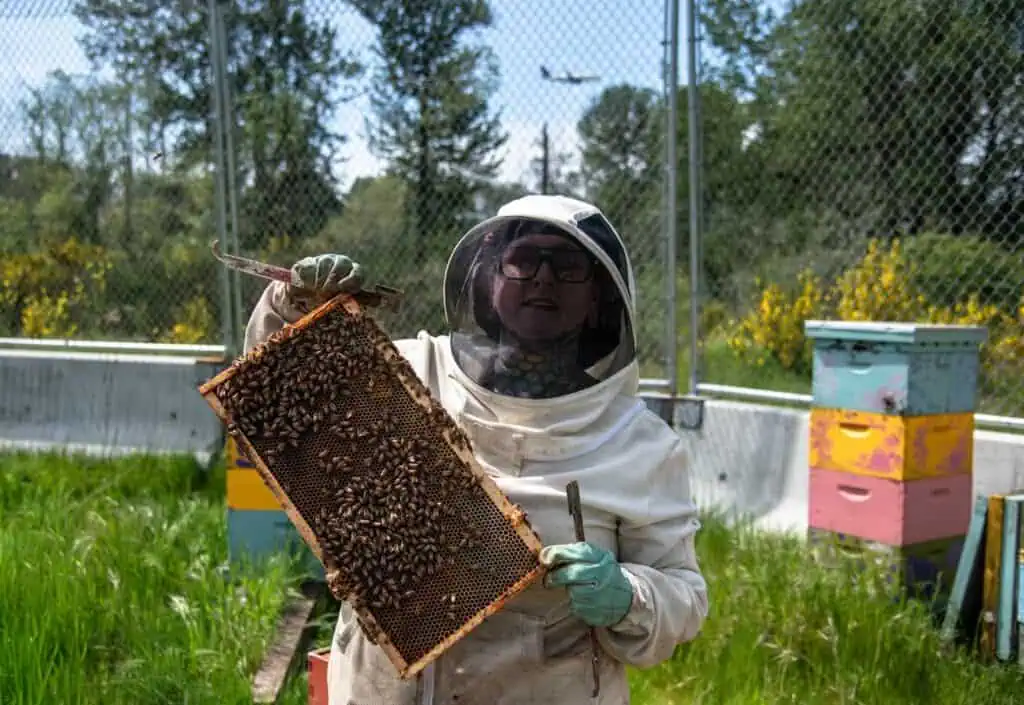
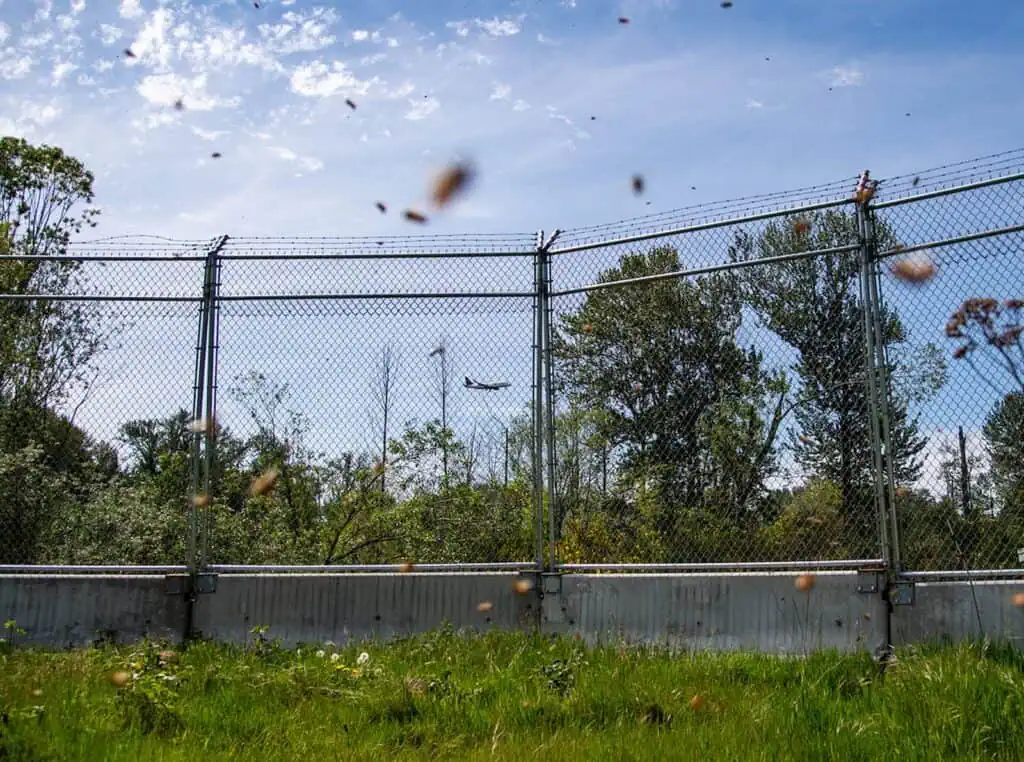
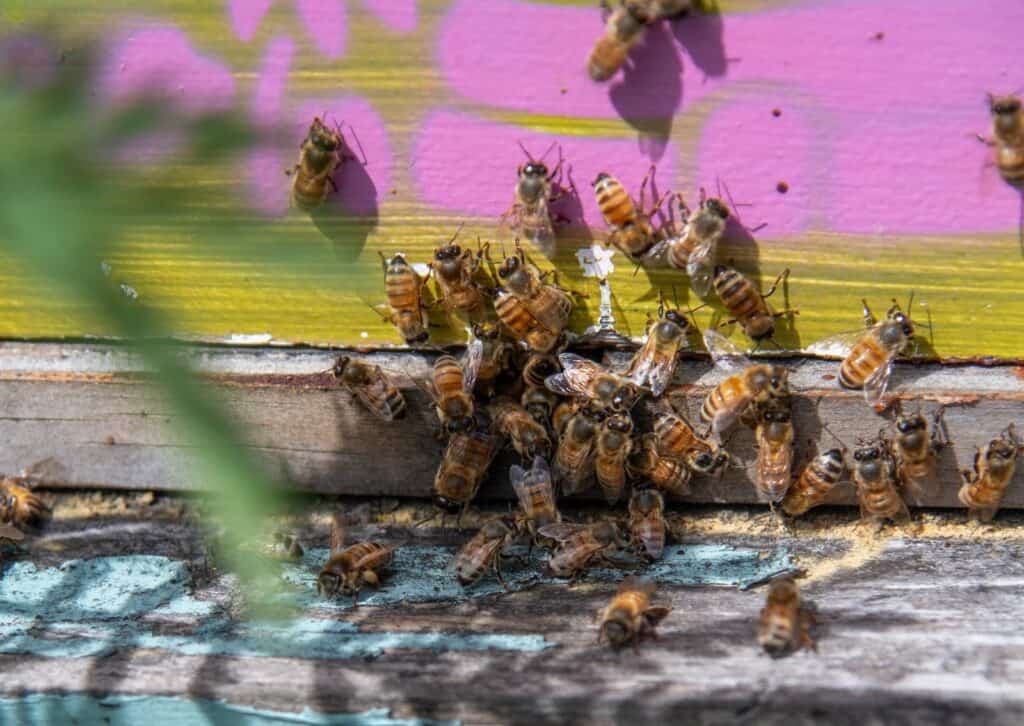
Planes landed on a runway in the distance, and every so often, the constant hum of the bees was drowned out for a moment by the low rumble of jets taking off just out of sight. All around us, thousands of bees flew their own tiny flight paths while jets crossed the sky beyond the fenced perimeter. Inside the apiary, everything moved to a different rhythm.
Siobhan described the bees as a kind of window into the health of the surrounding ecosystem. If honeybees bring pollen and nectar back to the hives, it’s a good sign that native pollinators are finding resources too. The honey is only part of the story. The larger point is what the bees can reveal about the landscape around the airport and the native pollinators that help sustain crops and wild ecosystems.
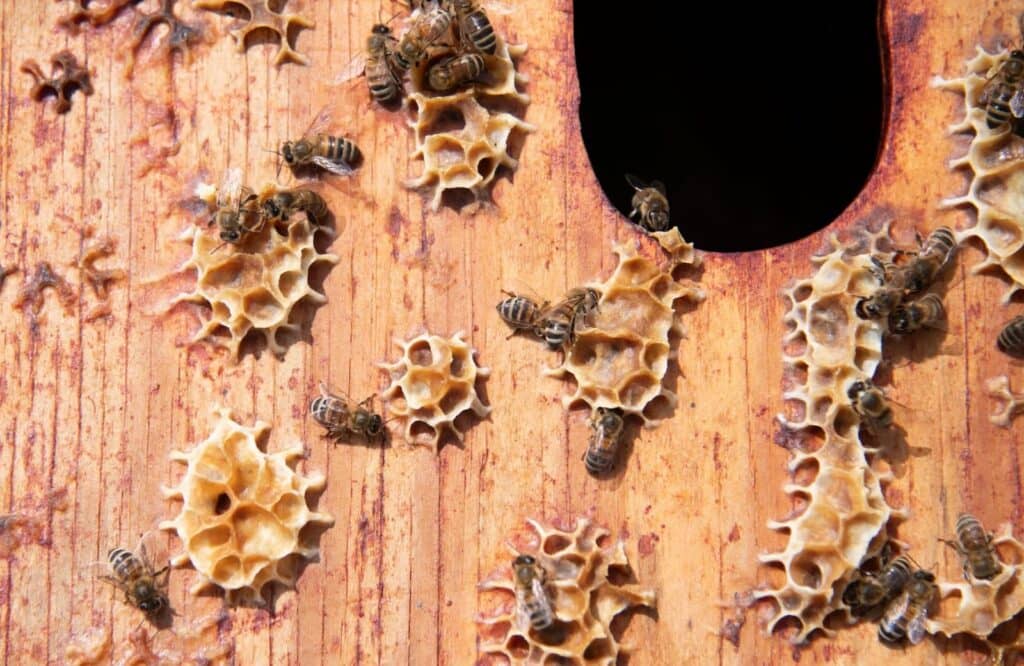
What struck me most was the feeling of stepping into a place travelers would never know was there. Even though the apiary is part of the airport landscape, it felt like a glimpse into a hidden ecology in a place most people experience only in transit.
As a photographer, I’m often drawn to places where two very different worlds overlap, and this is one of those places. As Siobhan put it, you wouldn’t think an airport would be a place of land stewardship, where honeybees overwinter year after year and queen bees mate in the landscape around the runways. But within the larger world of the airport, an entire ecosystem quietly carries on, and most people have no idea.
Navid Baraty is a Seattle-based photographer and visual artist whose work explores the intersection of science, scale, and wonder. With a background in engineering, he approaches his subjects with both precision and curiosity, from the geometry of cities seen from above to the stillness of remote desert landscapes beneath the night sky. Whether perched on rooftops high above cities or camped beneath the stars in the American Southwest, he is drawn to moments that reveal humanity’s place within something larger. Find him on Instagram at @navidbaraty.
Follow Us

Rearview Mirror: A Buzz at Salish Lodge, Gourmondo’s Next Steps, and a Spooky Casino
Things I did, saw, ate, learned, or read in the past week (or so).
NEXT STEPS, UNBOXED If you’ve lived in Seattle for any amount of time—especially if you work in a corporate setting—it’s likely that you’ve eaten something from Gourmondo, the longstanding Seattle catering and boxed-lunch company. Founded in Pike Place Market by Alissa Leinonen, Gourmondo recently celebrated its 30th anniversary with the announcement of Leinonen’s newest culinary…

Studio Sessions: Periko The Artist
The Mexican-born, Seattle-based artist paints vibrant figures that refuse to settle into fixed identities.
Can a painting ever contain an entire person? The works of Gerardo Peña, also known as Periko The Artist, leave room for their subjects to move and change, resisting the idea that any of us can be reduced to a single image or expression. Peña’s colorful, surreal figures capture something less fixed than a likeness,…

When Art and Tech Align
Xispa brings artists and technologists together in South Lake Union for residencies, experiments, and unexpected collaborations.
Discover xispa, Seattle's new art and tech innovation lab in South Lake Union blending the PNW arts community with the city's tech workforce. Step inside.

Studio Sessions: Liz Tran
After 26 years in Seattle, artist Liz Tran returned to Oregon, but her impact on our city’s art scene will always remain.
Liz Tran’s work blooms with color, energy, and emotion. Bright drips and drops, petal-like shapes—in Tran’s skillful hands, canvas, paint, and fabric burst into dynamic studies of nature, transformation, life. Born and raised in Oregon, Tran spent the past 26 years in Seattle, returning to her hometown, Eugene, to be closer to her family—and the…