





Health + Wellness
Read More ›
AI is in the Building
How emerging technologies are reshaping the future of healthcare design.

This article originally appeared in the July/August 2026 issue of Seattle magazine.
Artificial intelligence is rapidly reshaping healthcare, but the most important transformation is not technological—it’s human. As AI and emerging technologies become increasingly integrated into healthcare and wellness environments, the focus is shifting toward creating more compassionate, personalized, and supportive experiences for patients, families, and caregivers. Rather than replacing human connection, the most successful applications of AI augment care, reduce burdens on providers, and help healthcare systems deliver more precise care to the people they serve.
Across Puget Sound, healthcare providers, technology companies, researchers, and design leaders are increasingly exploring how artificial intelligence can reshape not only clinical care, but the environments where healing takes place. As healthcare systems navigate workforce shortages, operational pressures, and evolving patient expectations, the Pacific Northwest is emerging as an important testing ground for these more adaptive, human-centered models of care.
Healthcare leaders increasingly recognize that technology works best when it enhances the human experience. AI’s greatest value, after all, lies not in removing people from the equation, but rather in empowering clinicians and caregivers to spend more time focused on empathy, communication, and healing.
One of the clearest examples is the use of AI in diagnostics and predictive care. Machine learning tools can analyze vast amounts of clinical data to identify patterns associated with diseases such as cancer, diabetes, and cardiovascular disorders, often with remarkable speed and accuracy. Predictive analytics also help health systems identify risks earlier, reducing hospital readmissions, and enabling more proactive interventions.
Yet the real impact is what these efficiencies create for patients and providers.
When clinicians have access to faster insights and better data, they spend less time searching for information and more time engaging directly with patients. Technology then becomes a support system that strengthens clinical decision making while preserving the importance of trust, compassion, and human judgment.
Those shifts increasingly influence not only clinical workflows but also the environments where care is delivered. As healthcare systems become more data-informed and personalized, the design of healthcare facilities is evolving alongside them.
Healthcare architecture and interior design are advancing alongside these broader changes in care delivery. Emerging technologies such as intelligent building systems, ambient sensors, robotics, and digital twins help healthcare facilities become more responsive to patient and provider needs. These systems can adjust lighting, temperature, acoustics, and airflow in real time to support comfort, reduce stress, and improve healing outcomes.
However, healthcare leaders and designers also recognize an important challenge: Technology itself can unintentionally create anxiety if not thoughtfully integrated into the human experience. For many patients, environments dominated by robotics, screens, automation, and unfamiliar technologies can feel intimidating, impersonal, or emotionally overwhelming—particularly during moments of vulnerability.
As a result, the future of healthcare design is not simply about making spaces smarter, but about ensuring these healing environments remain calming, restorative, aesthetically beautiful, and deeply supportive of patient well-being. AI and robotics should blend seamlessly into care environments—not become the focal point of the experience.
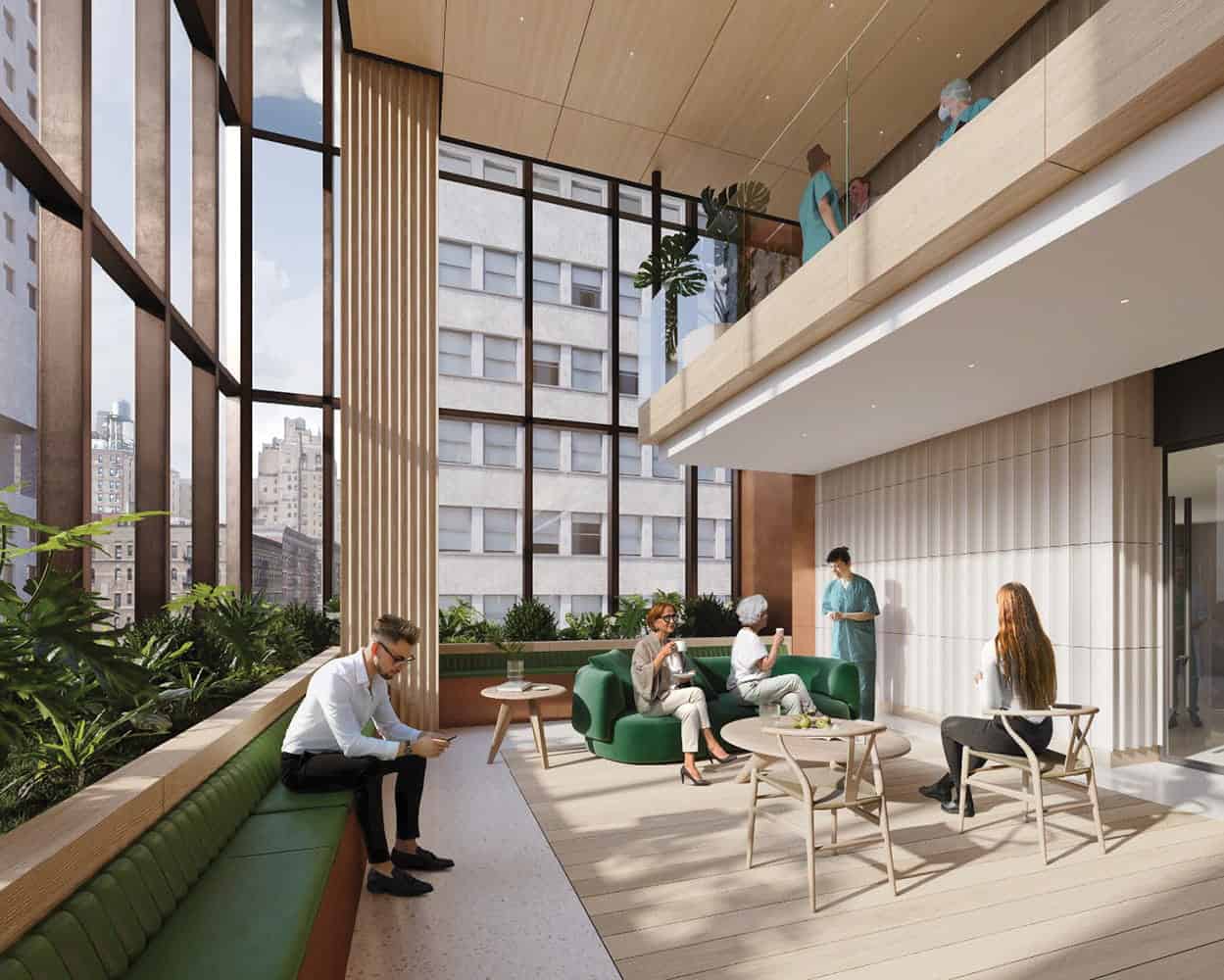
Designers increasingly focus on creating spaces that feel welcoming and emotionally supportive, using natural materials, biophilic design, softer acoustics, circadian lighting systems, intuitive interfaces, and human-scaled technology integration to reduce stress and promote healing.
Potential architectural and interior design outcomes are already emerging. Healthcare campuses can evolve into more hospitality-driven environments with flexible patient rooms that adapt to individual preferences and clinical needs in real time. AI-enabled systems could personalize environmental settings, adjusting lighting, acoustics, temperature, and other sensory conditions.
Waiting rooms can become less institutional and more wellness-oriented, incorporating calming sensory experiences, nature integration, and digital concierge systems that reduce uncertainty and anxiety. Robotics may quietly support logistics and back-of-house operations such as delivering supplies, medications, or meals, while remaining largely invisible to patients to preserve a sense of warmth and normalcy.
Designers are also exploring how virtual and augmented reality can support healing environments, pain management, and patient education. Interactive environments could help pediatric patients feel less fearful before procedures, while immersive wellness spaces may support mental health, rehabilitation, and cognitive therapies.
At the building scale, digital twins and AI-driven operational modeling help architects and healthcare leaders design facilities that are more resilient, efficient, and patient-centered from the outset. Designers can simulate patient flow, staffing patterns, infection control strategies, and emergency scenarios before construction even begins. This creates opportunities to improve safety, reduce operational stress, and create more intuitive care environments.
Healthcare designers are increasingly integrating neuroaesthetics, or the study of how environments influence the brain and body, into patient-centered spaces. Using biometric feedback and evidence-based design strategies, teams can better understand how physical environments affect emotional well-being, anxiety, and recovery. When thoughtfully applied, AI can help create environments that are quieter, more personalized, and more responsive to individual needs without making patients feel disconnected from caregivers or the care experience.
These innovations extend beyond hospitals and clinics. Wearable devices, smart home technologies, and conversational AI tools enable people to engage more actively with their own wellness in everyday life. Consumers can now continuously monitor sleep, stress, activity, and other health indicators, receiving personalized insights and recommendations tailored to their individual needs.
The goal, however, is not to overwhelm people with data or create constant digital intrusion. The most effective wellness technologies are those that produce meaningful support systems, helping individuals feel more informed, connected, and empowered in their health journeys. In this way, AI acts less like a replacement for care and more like a guide that supports healthier behaviors, proactive wellness, and ongoing engagement.
Ultimately, the future of healthcare will not be defined by artificial intelligence alone, but by how effectively technology reinforces humanity within care delivery. As healthcare organizations continue to innovate, the central question is no longer whether AI will shape the future of care. It already is. The real challenge ensures these technologies strengthen trust, improve outcomes, and create care environments that feel more responsive, supportive, and fundamentally human.

Brian Zeallear is a principal and studio practice leader, Health, at HKS, an interdisciplinary global design firm. HKS’s team of 1,800 architects, designers, planners, and advisers across 29 offices partner with clients to design and develop elegant solutions to complex challenges.
Follow Us

K9s For Warriors Helps a Whidbey Island Veteran Get Back Out Into the World
With his service dog Atlas beside him, Navy veteran Justin Hughes is finding his workdays—and everyday outings—easier to navigate.
When Justin Hughes gets frustrated while on his computer at work, a nose sometimes appears between the armrest and the back of his chair. It belongs to Atlas, his service dog, who has been resting on a bed behind him. Hughes runs simulators for the military, and irritation can build before he recognizes what’s happening….

Seattle Sauna Festival Returns to Ballard for Another Round
Mobile saunas from around the Northwest will gather at the National Nordic Museum November 7-8.
In Seattle, November is usually something to face in a raincoat. At the National Nordic Museum, you can meet it in a bathing suit. The Seattle Sauna Festival returns to Ballard November 7-8 for its second year, bringing mobile saunas from around the Northwest onto the museum grounds. Visitors can try several, cool off in…

Seattle Is Changing the Conversation Around Death
Death is one of life’s few certainties, yet it remains remarkably difficult to talk about. Across Seattle, a growing network of practitioners, advocates, and entrepreneurs is trying to change that. From grief walks to death doulas, Seattle is building a new language around loss, and one woman wants to bring more of that conversation into…

Do These 10 Popular Health and Wellness Trends Actually Work?
Local experts break down the results, risks, time, and cost behind everything from contrast therapy and red light masks to protein, Pilates, and rucking.
If you’re online at all, you’ve likely been exposed to any number of must-try workouts, don’t-miss beauty tips, and change-your-life diet suggestions purporting to help you lose weight, look younger, feel more energized, and sleep better. Scrolling social media often feels like a never-ending advertisement for new ways to spend money, presented through the shiny,…