





Outdoors
Read More ›
Hives Among the Headstones
Inside a north Seattle project reimagining cemeteries as sanctuaries for pollinators.

In many old stories, bees are more than just insects. They’re messengers—tiny intermediaries between the living and the dead. There was once even a custom in Europe and America known as “telling the bees:” When a family member died, or another significant life event occurred, someone would go to the hive to share the news. It was a gesture of respect, acknowledging that these small, humming creatures were part of the family—and, perhaps, attuned to mysteries beyond our own.
“In multiple cultures, there’s this understanding of bees as having something to do with life and death,” says beekeeper Annie Reading. “There is this kind of deep, ancient relationship there.”
At Evergreen-Washelli Cemetery in north Seattle, Reading and her colleagues are bringing the custom back—with some twists. On a recent fall afternoon, Reading bent over an observation beehive outside the cemetery’s lobby, reading a message left by a mourner. Inside the lobby, a small display explains the “telling the bees” tradition and offers cards for visitors to write messages to the bees. Reading whispers them to the creatures each time she tends the hive.
Reading is the co-founder of the Catacomb Bee Collective, a group of local beekeepers that also includes Madison Opp, Niya Weedon, and Colin Johnson. While the group first came together at the cemetery in 2021 with a different company, they formed their own operation under the current name in March 2025. The idea for the collective wasn’t born from folklore but from a need to find new spaces for these important little pollinators.
At first, Reading wasn’t even thinking about cemeteries. But while searching Google Earth one day for large patches of green, the cemetery’s 140-plus acres stood out. When she approached the cemetery, they were immediately interested, she says.
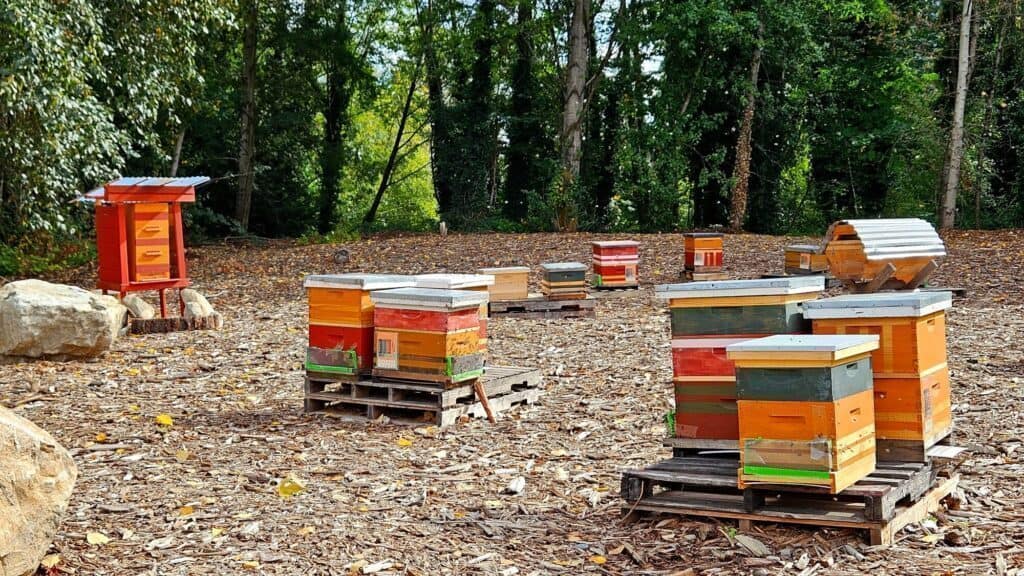
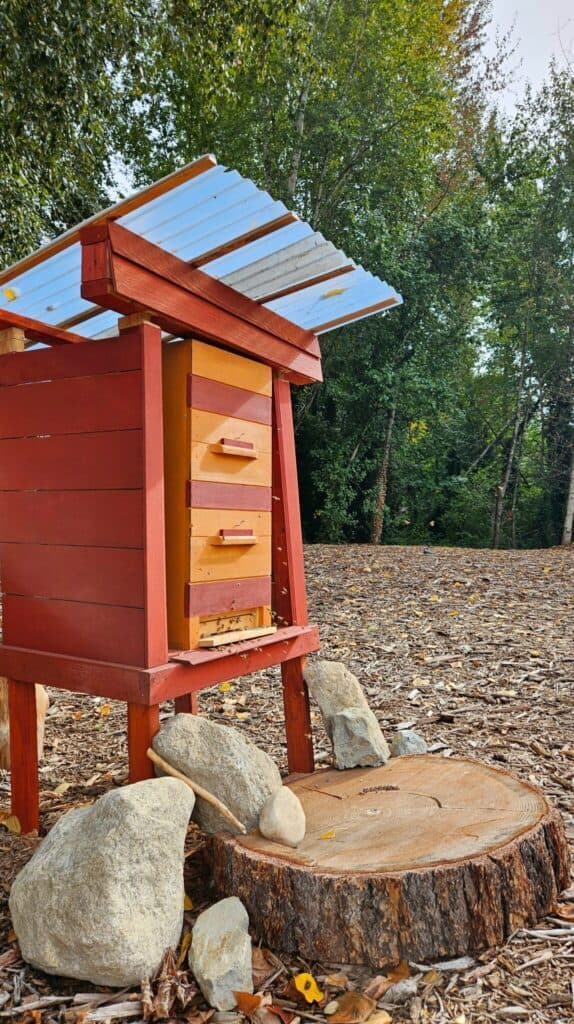
The partnership bloomed quickly. Evergreen-Washelli, one of Seattle’s oldest cemeteries, offered a large, overgrown corner of its grounds—a space that had once been a wetland and occasional dumping site. Together with Seattle Tree Care and volunteers, the cemetery cleared brush, laid wood chips, and reshaped the land into a sanctuary for the bees. Today, around 20 colonies of honeybees hum through this corner of the cemetery and swoop off to collect nectar nearby.
“It’s been a beautiful, natural partnership,” Reading says. The cemetery gets the ecological benefits of having hives, which pollinate the landscape, and the collective gets to use the space for free.
The bees, for their part, thrive. Cemeteries, with their mix of native and ornamental plants (plus the occasional graveside flower offering), can offer unusually rich and continuous forage compared to wilder landscapes, where there can be a dearth of food sources at certain times of year. And at Evergreen-Washelli, the staff has made deliberate changes to support the bees.
“We’ve switched almost all of our herbicide applications,” explains Aaron Sholes, the cemetery’s superintendent. Instead of spraying during warmer weather when weeds grow, they now spray in late fall and winter, when the bees aren’t active. “Not only has this yielded a much better end result for us, but it helps protect the bees,” Sholes says. “Being able to host all of these amazing little creatures is a privilege that we do not take lightly.”
What began as a practical partnership has deepened. A few families have even requested burial plots near the hives, Sholes says. “I think it brings people peace to know that even after they’ve passed they can continue to give back to nature,” he explains. The funeral home also offers small jars of the cemetery’s honey to bereaved families—a little sweetness in a bitter time.
As for concerns about swarming or stinging, Reading says they’ve been few. The Catacomb Bee Collective goes out of its way to maintain gentle bees. And these European honeybees are far more docile than many people think. Plus, honeybees are already around us all the time, she says—at least if we’re lucky.
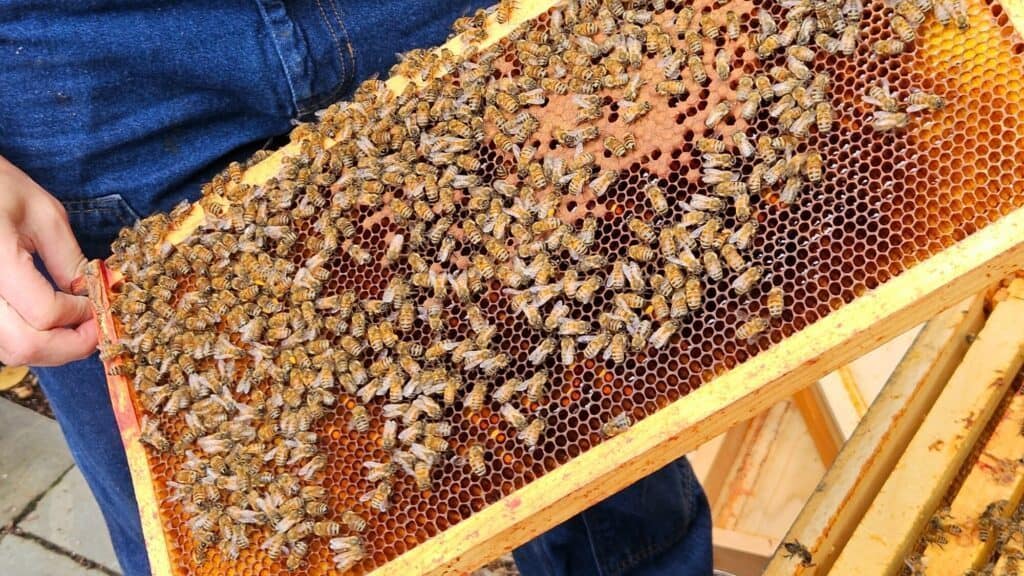
Educating the public about bees is a key part of the collective’s mission. From spring through fall, the group hosts public “honeybee experiences” at Evergreen-Washelli. Visitors don white bee suits, open a hive alongside Reading or one of her colleagues, and taste honey fresh from the comb. They also lead team-building sessions and presentations for workplaces (Google was one recent participant).
Two of the collective’s hives now live at elementary schools in Maple Leaf and Bellevue, where students can watch bees at work and learn how pollinators keep ecosystems—and lunchboxes—thriving. There’s another hive at a senior living community in Lacey, where residents sometimes gather in a circle of wheelchairs and walkers to greet beekeeper Colin Johnson’s arrival.
Reading freely admits she was not a cemetery person before the project. Now, she says, tending to the bees in this necropolis has changed her thinking—and she’d love to expand into other cemeteries too. “Culturally, we don’t really interface with death nearly as often as we could, and as people around the world do,” she explains. “When I come here, it does feel like it’s enriched my understanding of life, my thinking about cycles and thinking about renewal. That’s something that’s been surprising—this space actually makes me feel really alive, really plugged into like what it means to be alive.”
Sholes agrees. “Initiatives like this shift perceptions of cemeteries from mere places of sorrow to ones of life, renewal, and community involvement,” he says.
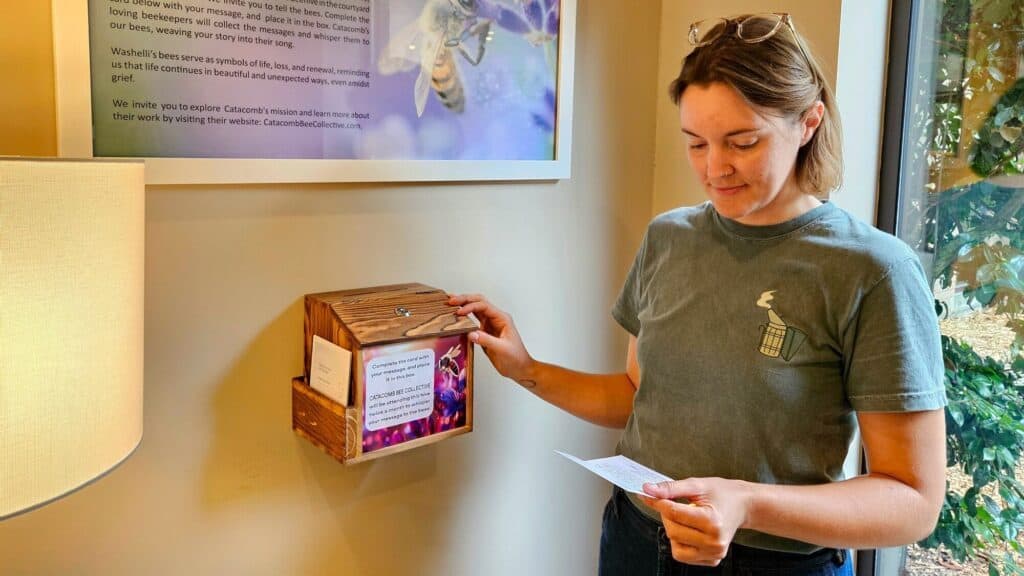
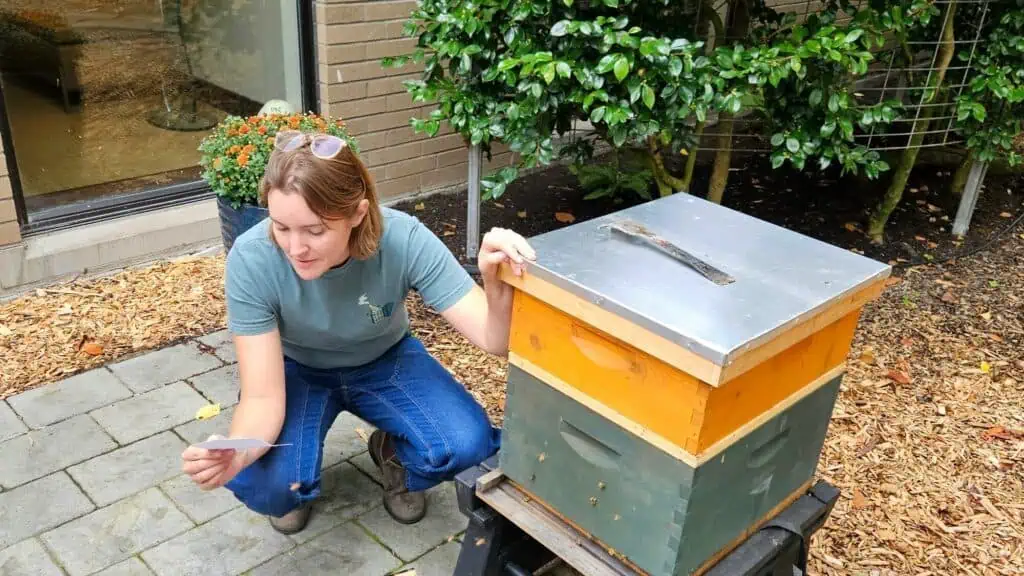
Even mourners benefit from the bees, and not just in the form of those jars of honey. The “Telling the Bees” cards fill up quickly with notes to lost loved ones. “We weren’t sure people would want to do it,” Reading says. “But people love it. It’s this outlet—like, ‘I’m holding these feelings, and I can share them with these bees.’”
For those curious about a taste of the honey (the bees made a definite surplus this year), keep an eye on Salmonberry Goods, a spring collaboration with the restaurant Off Alley, and the Catacomb collective’s Instagram for other initiatives, which might include a honey CSA.
That fall afternoon at the cemetery, a finger stuck into the honeycomb yielded honey that was rich and sweet with flavors far surpassing any of the store-bought stuff. While the finger in the comb left a scar, Reading assured me the bees would soon get to work refilling it. After all, they’re flourishing in their new home, and have plenty to spare.
Follow Us

A New Perspective on the Oregon Coast
Beyond the usual suspects like Astoria and Cannon Beach lie 300 miles of open road.
The Oregon Coast is a beguiling drive year-round, but autumn is when it feels most vital. The colors deepen, whales loiter in the shallows, and kites swoop against gray skies dappled with bursts of sunlight. At Tillamook Bay, Highway 101 veers inland through fifty miles of old-growth forest before re-emerging along the water. On this…

Inn at Langley: Where the Shore Meets the Sky
After a property-wide redesign, the Whidbey Island retreat reopens with a locally inspired take on vacationing in the Pacific Northwest.
Michelin-star chef Johnny Spero never planned to end up in the Pacific Northwest. A lifelong East Coaster born and raised in Baltimore, he began his culinary career at 16, working for a series of big-name chefs and restaurants before opening his own establishments in Washington, D.C., including Reverie, which earned him his Michelin star in…

The Northwest’s Gateway to Wine, Culture & Adventure
Escape the crowds. Slow down. Savor fall in the Lewis Clark Valley. As autumn paints the hillsides in gold, crimson, and amber, the Lewis Clark Valley becomes a picture-perfect place to slow down and savor the season. Where Washington and Idaho meet, fall brings crisp days, colorful landscapes, harvest among the vines, and plenty of…

Meet West Seattle’s “Freelance Beaver Detective”
A group of urban beavers helped Pamela Adams through a tough time. Now she’s returning the favor.
Pamela Adams was living in Port Townsend when her marriage fell apart. Little did she know at the time that she would soon find love again while doggedly pursuing the Five Families—not the ones of Mafia lore, but a four-legged sort living along the Longfellow Creek Watershed. Prior to moving to Washington, Adams resided in…