





Travel
Read More ›
A New Perspective on the Oregon Coast
Beyond the usual suspects like Astoria and Cannon Beach lie 300 miles of open road.

This article originally appeared in the September/October 2026 issue of Seattle magazine.
The Oregon Coast is a beguiling drive year-round, but autumn is when it feels most vital. The colors deepen, whales loiter in the shallows, and kites swoop against gray skies dappled with bursts of sunlight. At Tillamook Bay, Highway 101 veers inland through fifty miles of old-growth forest before re-emerging along the water. On this stretch, the coast begins to reveal its true character, with fall festivals, quirky shops, and salty seafood shacks.
Lincoln City
The kites were the reason we came. Everything else felt like a bonus.
In 1979, a kite shop owner named Steve Lamb decided this quiet, off-season coastal town needed a festival. So, Lincoln City built its identity around the sky. Its location on the 45th parallel—exactly halfway between the equator and the North Pole—makes for ideal winds. International pilots [the person on the ground manipulating the kite in the air] are true masters of the ancient craft, flying kites the size of small cars through routines choreographed to music, solo and in formation. Five minutes of watching the festivities was enough to put a grin on our faces.
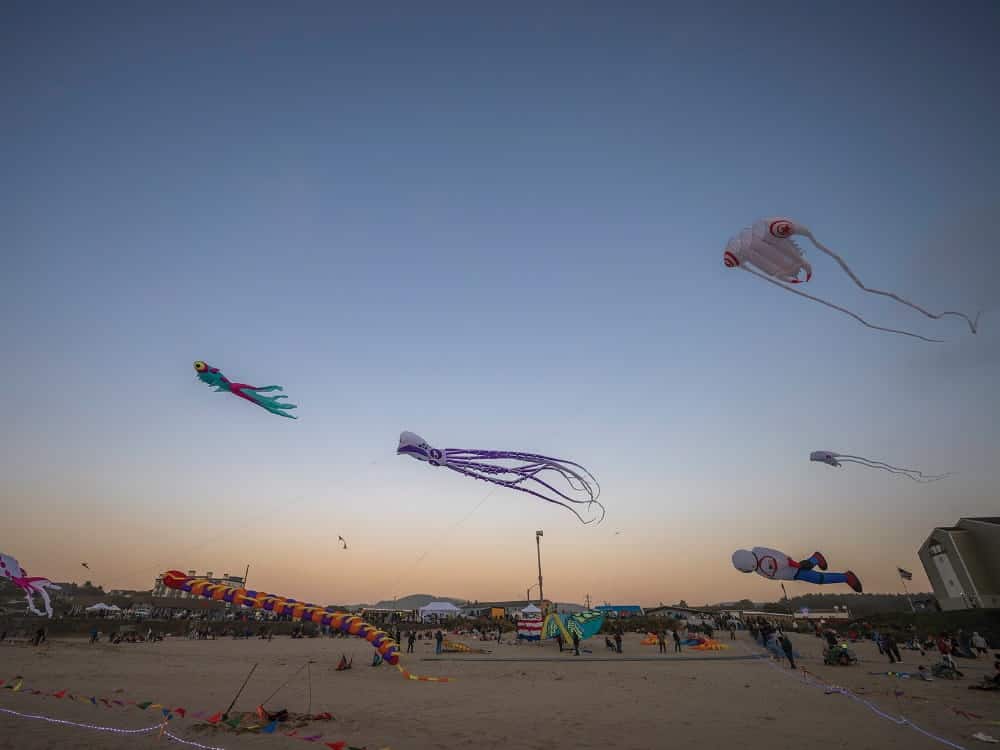
We saw a young pilot flying an intricate slack-line set that didn’t resemble a single thing we’d seen the rest of the weekend, his kite dropping dangerously close to earth before he snapped the line taut in the nick of time. In another session, a kite flier improvised as he went, communicating with fellow pilots from France, Canada, and Singapore via headset, their kites closely following his in swooshing lockstep. As “Redbone” by Childish Gambino blared through the speakers, the crowd was on its feet, cheering.
The fall festival features competitions, such as the centuries-old Japanese kite battle, in which fliers try to strike each other’s hexagonal rokkaku kites from the sky. Last kite standing wins. Kites were born in ancient China, across the same horizon we were gazing out upon. This year, the festival landed at Chinook Winds Casino Resort, a temporary home. The kites fly rain or shine. As it rained, we watched the sky over a platter of delicious elk medallions at the Rogue River Restaurant. Covered and warm, kites visible through the glass, the beach put on its show without us ever leaving the table.
Finders Keepers
Our instructor at Lincoln City Glass Center dipped the blowpipe into the glory hole [an industry term for a furnace used to reheat cooled glass in order to shape it] and drew out a glowing orb, somewhere between orange and white, rolling it slowly until it held its shape. We’d picked our colors—purple and pink pressed into the hot surface—and watched them bleed into the glass like ink dropped in water. Then came the fun part as she pulled a thin string of molten glass loose with a pair of jacks (basically a giant pair of tweezers), and twisted it, once, twice, three times, until the shapeless blob suddenly grew legs. Curled, trailing pink tentacles hung off the small purple bell. A jellyfish, unmistakably, still glowing. We wanted to hold it right away, but off it went to be annealed, cooling overnight at just under 900 degrees. The piece would be waiting for us the next day, and no two pieces would ever look alike.
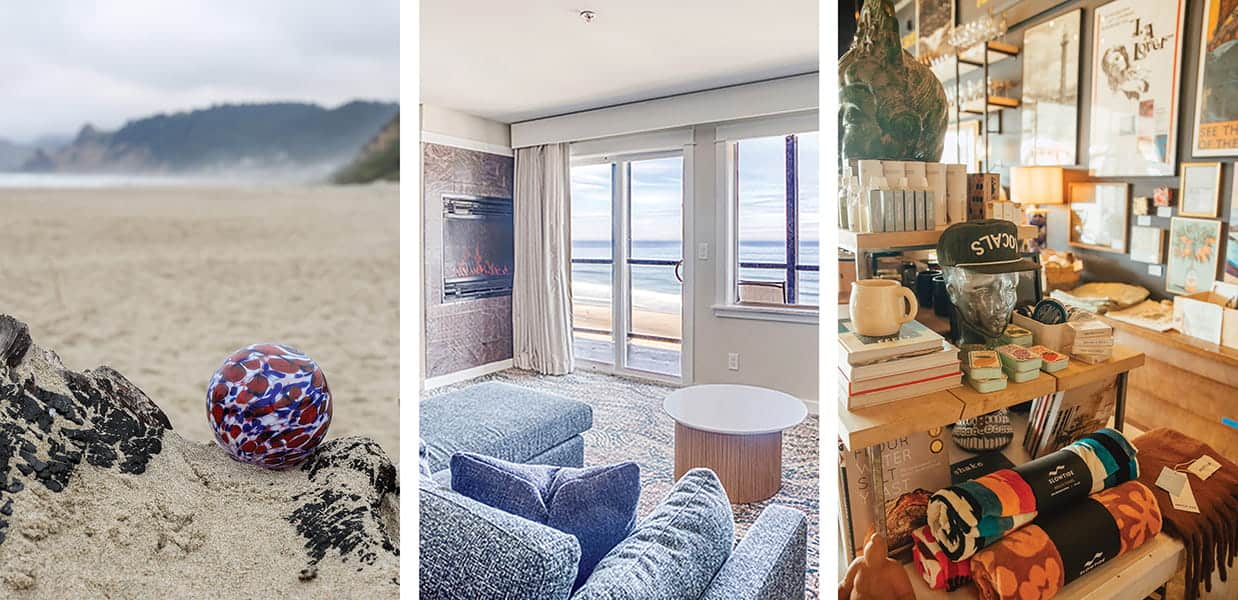
Other than the kite festival, the glass center was the busiest place we encountered all weekend. Slowly, we came to understand the importance of glass art to Lincoln City. The owner, artist Kelly Howard, was described by locals as a boon for the town, attracting and employing newcomers and giving back to the community.
That’s been the deal in Lincoln City since 1999, when the town launched its Finders Keepers program. Volunteer “float fairies” scatter roughly 3,000 hand-blown, signed, and numbered glass floats across the beach’s seven miles every year, free to whoever’s patient enough to spot one. The concept borrows from a phenomenon that used to happen here for decades: glass fishing floats from Japan, knocked loose from nets an ocean away, occasionally washed ashore on their own, carried in by the Pacific currents. Eventually, Lincoln City decided to stop waiting on chance and start creating these lovely little accidents on purpose.
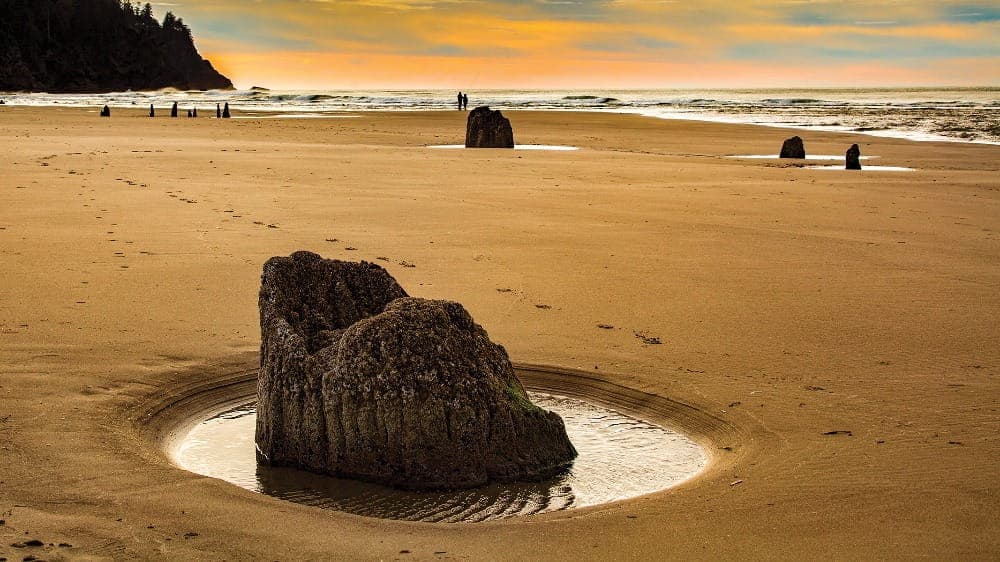
That afternoon, we took a slow, cathartic walk at low tide and caught ourselves scanning the sand, eyes down, looking for hidden floats half-buried. We didn’t find one, but we learned a helpful hint for future seekers: Halloween is an especially fruitful time to search. Fall is also, not incidentally, a fine time to book a room at Starfish Manor. It sits directly on the beach, ideal for long, gentle rides on a fat bike. Several of its recently renovated rooms offer in-room hot tubs that face the water—not a bad way to end the day, looking up into a cold, bright sky.
The next morning, we kept our eyes pointed skyward to Siletz Bay with the Seven Capes Bird Alliance. The local Audubon chapter has spent twenty years logging ospreys and great blue herons along this stretch of coast. We went looking for nothing specific and found an egret standing dead still in the reeds, pure white, unbothered, and regal.
Foodie and Vintage Finds
We wandered into The Pines Dine food truck court in the early summer drizzle and were pleasantly surprised to find a cozy interior space, with turn-of-the-last-century glass and wood. As we tucked into our poke bowls, the cheerful bartender patiently described the deep roster of Oregon ales on tap. The lineup felt carefully curated to satisfy any palate: Thai, Hawaiian, burgers, gyros, tacos, and pulled pork sandwiches.
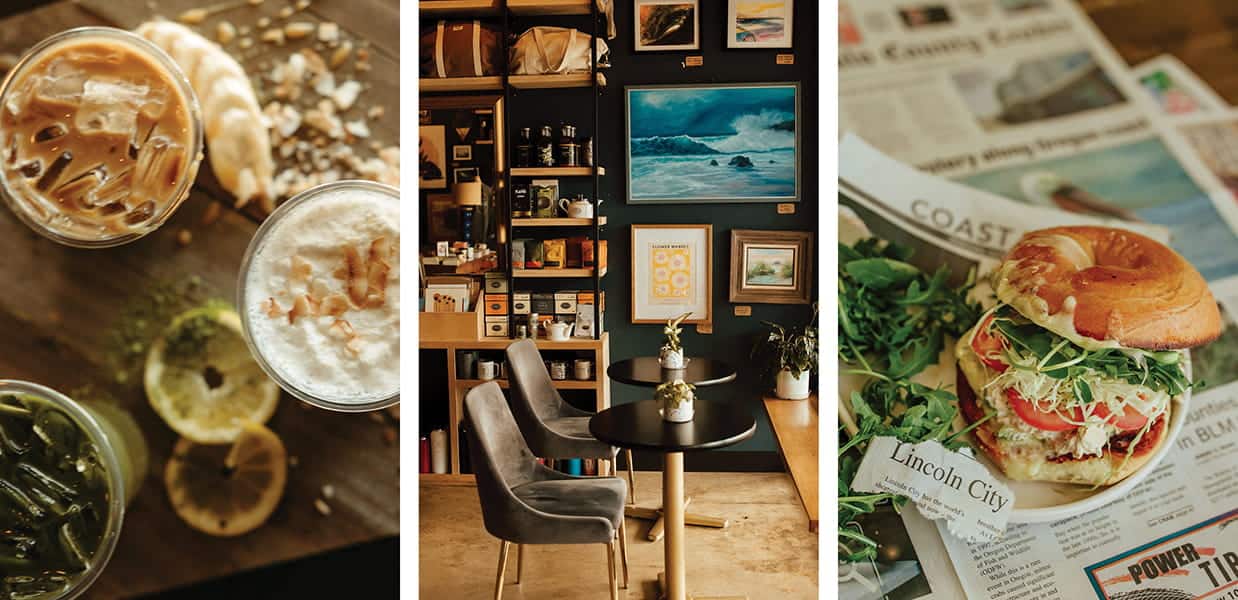
At Staghorn Vintage, we met owner Lisa Cooper, who was enjoying a calm afternoon. She sells classic ’50s nautical treasures, handsome coffee table books, and other vintage nostalgia. Down the block, Output Records held floor-to-ceiling vinyl and an owner with a strong opinion on everything he sold. Beside the shop, Bob’s Beach Books has been a beloved fixture for the browsing crowd, with a vast selection of specialty genre titles. In the Historic Taft District, the Siletz Bay Trading Post has become a center of gravity for indie locals: Eleanor’s Undertow for ice cream, Sea Horsey to stock the picnic basket with Pacific Northwest wine, and ZuhG Life: a surf shop, a band, a state of mind—and even a local muralist we later found on the Lincoln City Art Trail.
Salt, buried inside an outlet mall, of all places, runs a lunch counter with flair. The diner doubles as a sleek gift shop, selling books, soaps, and candles next to gluten-free Mediterranean tuna sandwiches and Stumptown coffee. The stylish little café suggests a community that’s quietly evolving beyond its beach-town reputation.
We caught a stunning sunset with a drink at Kyllo’s Seafood & Grill, a reliable beachfront standby, before heading out for the final stretch south.
Heavenly Creatures
A few miles on, in Depoe Bay, gray whales feed through summer and fall, coming close enough to shore that to spot them, a boat isn’t even necessary. From the rocks above Pirate’s Cove, we watched a single whale surface and roll just thirty feet offshore for probably twenty minutes—no boat, no tour, just a beautiful animal that happened to be there when we were. As with the kites and the glass floats, it was serendipitous, but hardly an accident.
Follow Us

Inn at Langley: Where the Shore Meets the Sky
After a property-wide redesign, the Whidbey Island retreat reopens with a locally inspired take on vacationing in the Pacific Northwest.
Michelin-star chef Johnny Spero never planned to end up in the Pacific Northwest. A lifelong East Coaster born and raised in Baltimore, he began his culinary career at 16, working for a series of big-name chefs and restaurants before opening his own establishments in Washington, D.C., including Reverie, which earned him his Michelin star in…

The Northwest’s Gateway to Wine, Culture & Adventure
Escape the crowds. Slow down. Savor fall in the Lewis Clark Valley. As autumn paints the hillsides in gold, crimson, and amber, the Lewis Clark Valley becomes a picture-perfect place to slow down and savor the season. Where Washington and Idaho meet, fall brings crisp days, colorful landscapes, harvest among the vines, and plenty of…

Meet West Seattle’s “Freelance Beaver Detective”
A group of urban beavers helped Pamela Adams through a tough time. Now she’s returning the favor.
Pamela Adams was living in Port Townsend when her marriage fell apart. Little did she know at the time that she would soon find love again while doggedly pursuing the Five Families—not the ones of Mafia lore, but a four-legged sort living along the Longfellow Creek Watershed. Prior to moving to Washington, Adams resided in…

A Wellness Pilgrimage to the Olympic Peninsula
Two hours from Seattle, a new kind of luxury is taking root—one built on stillness, old-growth forests, and the subtle art of slowing down.
There is a school of thought among the overworked and overscheduled that the most subversive thing a person can do is stop. Put down the phone, close the laptop, and go somewhere that actively resists attempts to stay plugged in. The Olympic Peninsula has always offered this, in its blunt, mossy way. For some city…